
Foreign Bank Account IRS Payment
Foreign Bank Account IRS Payment: scope, eligibility and process for United States (federal), current as of the 2026 tax year.
Paying the IRS from a foreign bank account is possible for the 2026 tax year, but the method available to you depends on where your account is held and which IRS payment system can reach it. Most IRS electronic payment channels, including Direct Pay and the Electronic Federal Tax Payment System (EFTPS), require a US bank account; a foreign account holder generally cannot use those systems directly. The options that do exist, including wire transfer through a US correspondent bank and same-day wire using IRS Form same-day wire instructions, carry specific formatting, timing and currency requirements that determine whether a payment posts correctly and on time.
What foreign bank account IRS payment means
For tax year 2026, a foreign bank account IRS payment is a transfer of U.S. federal tax liability from a bank account held outside the United States to the Internal Revenue Service. U.S. citizens and resident aliens are taxed on worldwide income regardless of where they live or bank, so the location of the funding account does not change what is owed. What it does change is the mechanics of getting the money to the IRS: the method available to a taxpayer depends on whether their foreign bank has a relationship with a U.S. correspondent bank, and all payments must arrive in U.S. dollars, as confirmed by the IRS on its Foreign electronic payments page.
Direct pay foreign bank account
IRS Direct Pay is a free service that allows payment directly from a bank account with no fee, as noted in the IRS's Questions and answers about Executive Order 14247. However, as the IRS confirms in its Direct Pay help guidance, neither Direct Pay nor Individual Online Account accepts payments from a foreign bank that has no U.S. affiliate. If a taxpayer holds an account at an international bank that does have a U.S. affiliate, that bank may be able to supply a U.S. routing number, making Direct Pay available. Without one, the taxpayer must use a different route.
The primary alternative for a taxpayer with no U.S.-affiliated bank is an international wire transfer. To complete one, the taxpayer's foreign bank must itself have a banking relationship with a U.S. correspondent bank, and the taxpayer must complete the Same-Day Taxpayer Payment Worksheet with the correct Tax Type Code and tax period so the payment posts to the right liability. For a 2026 Form 1040 estimated tax payment, for example, the applicable five-digit tax type code is 10406. The IRS routing transit number for wire transfers is 091036164, and the IRS account number is 20092900IRS (its use is optional). These details are published on the IRS's Foreign electronic payments page.
The IRS notes on that same page that international wire transfers can be costly, and recommends that taxpayers consider other options, including payment by credit card, to avoid high transfer fees. A credit card issued by a foreign bank is acceptable provided it carries a network accepted by IRS processors, such as Visa or Mastercard, as confirmed by IRS Internal Revenue Manual section 5.21.4. Taxpayers without a U.S. bank account may also use a cash management account through the Electronic Federal Tax Payment System (EFTPS): a brokerage-issued routing transit number can be used to establish EFTPS enrollment, and there are no fees associated with payments made this way.
One timing point applies across all methods. Under Topic 653, interest accrues on any unpaid tax from the original due date of the return until the date of payment in full, and the IRS applies payments first to tax, then to penalty, then to interest. Getting the payment method right before the due date, not after, is what limits that exposure.
Who this applies to
This section covers U.S. citizens and resident aliens who maintain a bank account at a foreign financial institution and need to pay federal income tax to the IRS. It also covers individuals who live abroad and receive the automatic two-month extension under Publication 54 (12/2025), which postpones the filing and payment deadline but does not stop interest from accruing on any tax not paid by the regular April due date.
It does not cover:
- U.S. businesses, partnerships, or corporations making federal tax payments
- Individuals whose only connection to a foreign bank account is holding a foreign account for reporting purposes under FBAR or FATCA, without a corresponding federal tax payment obligation
- State or local tax payments, which follow separate rules and payment channels
If you are a nonresident alien filing Form 1040-NR, the payment mechanics differ in ways this page does not address. The page that covers nonresident filing and payment obligations is the right starting point for that situation.
How it works
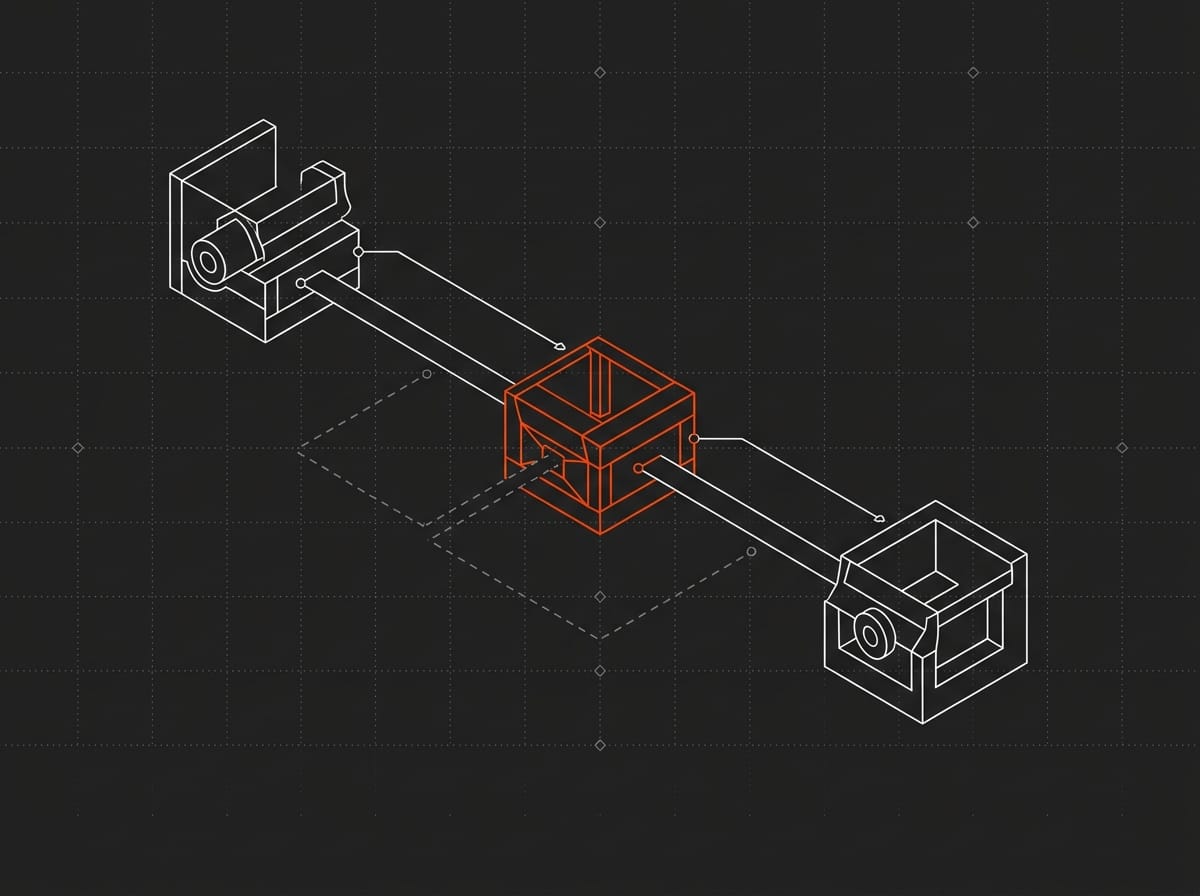
Every foreign bank account payment to the IRS routes through a same-day wire, and the document that makes that wire work is the Same-Day Taxpayer Payment Worksheet. The worksheet carries two pieces of information the IRS requires to apply funds correctly: the Tax Type Code, which identifies the kind of tax being paid, and the tax period. Without both, a payment can arrive at the IRS and remain unmatched to a liability. The IRS publishes the applicable Tax Type Codes for international wire payments at Foreign electronic payments: tax type codes.
Once completed, the worksheet goes to the taxpayer's financial institution, which executes the wire. The IRS details this process at Pay taxes by same-day wire.
One worksheet covers one tax form and one tax period. A taxpayer settling two years of income tax, or income tax and a separate penalty, must complete a separate worksheet for each. Combining payments on a single worksheet risks misapplication.
The process step by step

Sequence and documentation
Before initiating a payment, confirm which method applies to your situation, then gather the required identifiers: your taxpayer identification number, the tax period, and the form type the payment covers (for example, Form 1040 for tax year 2026).
Same-day wire. Your bank originates the wire using the Federal Tax Collection Service (FTCS) format. The IRS publishes a Financial Institution Handbook, available through the pay taxes by same-day wire page, that specifies the exact formatting and processing requirements financial institutions must follow. Provide your bank with the correct payment detail fields before the wire is sent; errors in those fields can cause misapplication.
Foreign-issued credit card. A credit card issued by a foreign bank is accepted provided the network is one the IRS processors recognize, such as Visa or Mastercard, per IRM 5.21.4. The same IRM section governs how revenue officers process payments from foreign sources for taxpayers without a U.S. bank account.
Retain your bank's wire confirmation or card transaction receipt as proof of timely payment.
Common mistakes and exceptions
Three mistakes appear often enough to be worth naming before you file.
Assuming a foreign account is invisible. Since 2015, the Foreign Account Tax Compliance Act (FATCA) has required foreign banks, investment funds, and other financial intermediaries to report information about accounts controlled by US taxpayers directly to the IRS. Researchers estimated that roughly 1.5 million US taxpayers held approximately $4 trillion in foreign accounts in 2018. The reporting infrastructure is in place; an account held abroad is not outside the IRS's view.
Conflating FBAR and tax payment obligations. Reporting a foreign account on FinCEN Form 114 (the FBAR) is a separate requirement from paying tax on income earned in that account. Filing one does not satisfy the other.
Treating a foreign account as a payment source without verifying IRS acceptance. Not every foreign account can fund a direct payment to the IRS. Confirm the routing and account format the IRS accepts before initiating a transfer, or the payment may not settle.
Where to go next
If this page answered your immediate question about foreign bank account IRS payment, the pages below cover the territory that borders it.
Reporting obligations before you pay. Understanding what you owe begins with knowing what you must disclose. The parent hub on foreign account tax compliance covers FBAR filing under 31 U.S.C. § 5314, FATCA reporting under IRC § 6038D, and how those obligations interact with your payment timeline.
Adjacent questions this page does not answer. Each of the following has its own page:
- Foreign bank account reporting requirements (what to file, when, and with which agency)
- FBAR penalties and how they are calculated
- How foreign tax credits under IRC § 901 affect the amount you owe before you pay
- Currency conversion rules for reporting foreign income
If your situation involves an entity rather than an individual, the rules governing corporate or partnership accounts differ in material ways. See the page on business foreign account tax payments for that fact pattern.
Explore the Platform to see how Remitian routes and confirms cross-border tax payments once your liability is established.
Frequently asked questions
Who qualifies for foreign bank account irs payment?
Any US person (citizen, resident alien, or entity subject to US tax jurisdiction) who owes a federal tax liability may satisfy that obligation through an IRS-accepted payment method regardless of where their bank account is held. The qualifier that matters: IRS Direct Pay and the Electronic Federal Tax Payment System (EFTPS) require a US financial institution account. Taxpayers banking exclusively abroad must route payment through an alternative method, such as an international wire to the IRS.
What documentation does foreign bank account irs payment require?
The documentation required depends on the payment channel. For an international wire to the IRS, the taxpayer needs the IRS wire instructions (published by the IRS for the relevant tax type), the taxpayer identification number, the tax year (2026 for current-year obligations), and the payment type code. The qualifier that matters: incomplete or incorrectly coded wires can be misapplied or returned, so confirming the correct routing details directly with the IRS before initiating the transfer is advisable.
What happens if foreign bank account irs payment is handled late?
The documentation required depends on the payment channel. For an international wire to the IRS, the taxpayer needs the IRS wire instructions (published by the IRS for the relevant tax type), the taxpayer identification number, the tax year (2026 for current-year obligations), and the payment type code. The qualifier that matters: incomplete or incorrectly coded wires can be misapplied or returned, so confirming the correct routing details directly with the IRS before initiating the transfer is advisable.
References
Figures and rules below are as stated for the 2026 tax year.
- IRS. Foreign electronic payments – Tax type codes | Internal Revenue Service (2026-10-14): Primary
- IRS. Direct Pay help | Internal Revenue Service (2026-10-14): Primary
- IRS. Pay taxes by same-day wire | Internal Revenue Service (2026-10-14): Primary
- IRS. 5.21.4 Payments Made in Foreign Currency | Internal Revenue Service (2026-10-14): Primary
- IRS. Publication 54 (12/2025), Tax Guide for U.S. Citizens and Resident Aliens Abroad | Internal Revenue Service (2026-10-14): Primary
- IRS. Questions and answers about Executive Order 14247: Modernizing Payments To and From America’s Bank Account | Internal Revenue Service (2026-10-14): Primary
- IRS. Topic no. 653, IRS notices and bills, penalties and interest charges | Internal Revenue Service (2026-10-14): Primary
Tagged with:

Need to pay the IRS from abroad?
Tell us about your situation and a Remitian specialist will follow up.
Pay your foreign taxes